
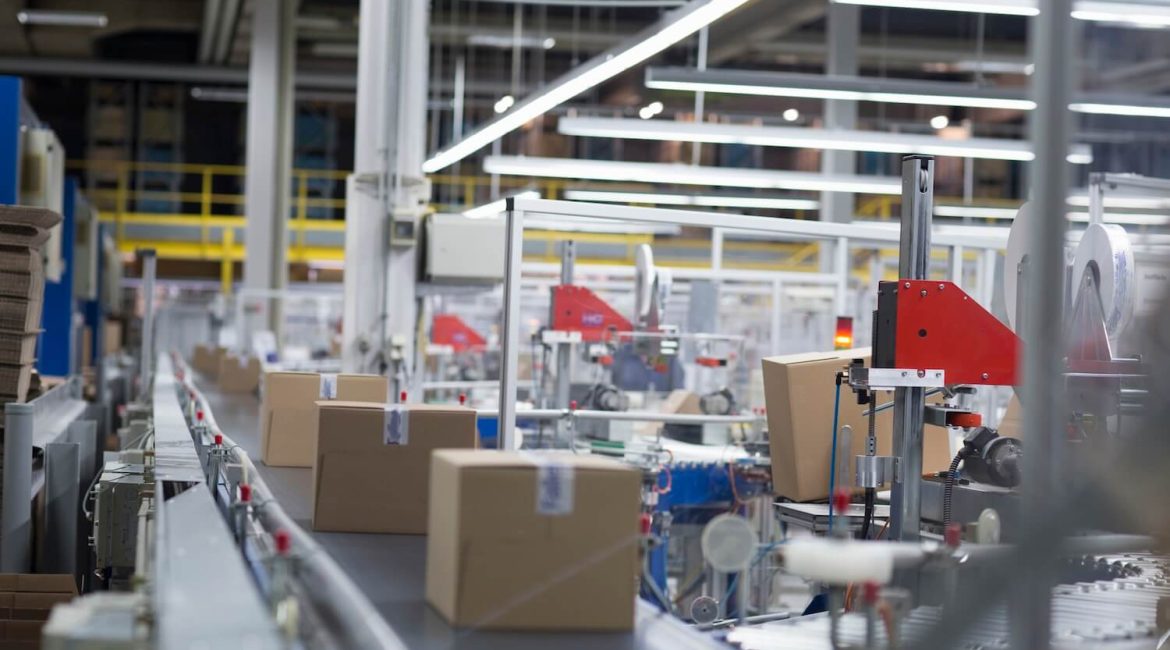
The Friday afternoon hum of a Dallas production floor is a rhythmic, profitable sound. But for an Operations Director eyeing a move to a larger facility in the DFW metroplex, that sound often carries an undertone of anxiety. Traditionally, industrial plant relocation in Dallas has meant “The Big Dark”, a week-long total shutdown that hemorrhages revenue, spikes stress levels, and disrupts client trust. It doesn’t have to be a choice between growth and stability. By using a single point of contact and integrated logistics dashboards, we help DFW manufacturers move to new locations in phases with close oversight. The outcome? Your “Line A” stays live while “Line B” moves, ensuring your market share remains untouched while your capacity doubles.
The Invisible Cost of the “Traditional” Move
Imagine the scene: It’s Tuesday morning. Your primary Dallas manufacturing facility is silent. Dust covers the floor where multi-million dollar CNC machines once stood. Your best operators are standing around in a half-finished warehouse in Grapevine or Arlington, waiting for a rigger who is stuck in I-30 traffic or an electrician who didn’t get the memo about the 480V requirements.
Every hour that passes is a line item on a loss statement. But the costs aren’t just financial. There is the “re-start lag”, that agonizing period after a move where machines aren’t quite calibrated, tolerances are off, and your scrap rate triples. For a Dallas plant manager, this isn’t just a relocation; it’s a threat to a hard-won reputation.
The “Weekend Advantage” was born from a simple realization: In the DFW industrial powerhouse, uptime is the only currency that matters.
Why a Phased Move Strategy is the CEO’s Secret Weapon
In a city like Dallas, where the industrial market is moving faster than the traffic on the Tollway, the ability to scale without pausing is the ultimate competitive edge. This is where commercial moving phasing transforms from an industrial logistics tactic into a business strategies.
The Logic of the “Leapfrog”
Instead of treating your factory as one giant box to be moved, we treat it as a series of independent revenue cells.
- Revenue Preservation: By keeping 75% of your capacity online at all times, you fulfill existing contracts and maintain your supply chain position.
- Risk Isolation: If a complex piece of equipment requires extra calibration time at the new site, your legacy site continues to carry the load. You never “pull the plug” on the old line until the new line is verified and producing at spec.
- Specialized Labor Utilization: Your specialized technicians aren’t overwhelmed by a 100-machine move. They can focus on bringing one cell online with 100% accuracy before moving to the next.
The 4-Weekend Phased Timeline (Sample)
This framework allows for a controlled moving transition that respects the complexity of industrial machinery.
| Phase | Weekend 1: The Foundation | Weekend 2: The First Wave | Weekend 3: The Heavy Lift | Weekend 4: The Final Switch |
| Old Site Status | Lines A, B, C & D Active | Lines A, B & C Active | Line A Active | Decommissioning Final Clean |
| Relocation Target | Raw Materials, Tooling, Safety Inventory | Line D (Secondary Production) | Line B & C (Core Production) | Line A (High-Priority) & Front Office |
| New Site Status | Receiving & Floor Marking | Line D Calibration & Testing | Lines B & C Integration | Full Scale Production |
The Technical Handshake: Corporate Utilities and Precision Rigging
The most common bottleneck in production line movers in Texas is the “Handshake” between the riggers and the MEP (Mechanical, Electrical, Plumbing) contractors. If your heavy machinery arrives at the new site and the power drops aren’t live, you are paying for specialized labor to stand around and wait.
Pre-Flighting the Destination
Professional white-glove relocation involves “Pre-Flighting” the destination. This is a rigorous process that happens weeks before the first truck arrives:
- Laser-Mapping: We map the new floor plan to the millimeter. We don’t just look at where the machine goes; we look at the overhead clearance, the swing radius for maintenance doors, and the proximity to air lines.
- The “Live-Drop” Method: We coordinate with industrial electricians to ensure power, compressed air, and data drops are live and tested before the machine leaves the old dock.
- Foundation Prep: For heavy-duty equipment, we ensure floor thickness and anchoring points are verified, avoiding the “Monday Morning Surprise” of a cracked slab.
Safety Zones: Moving Heavy Iron in a Live Environment
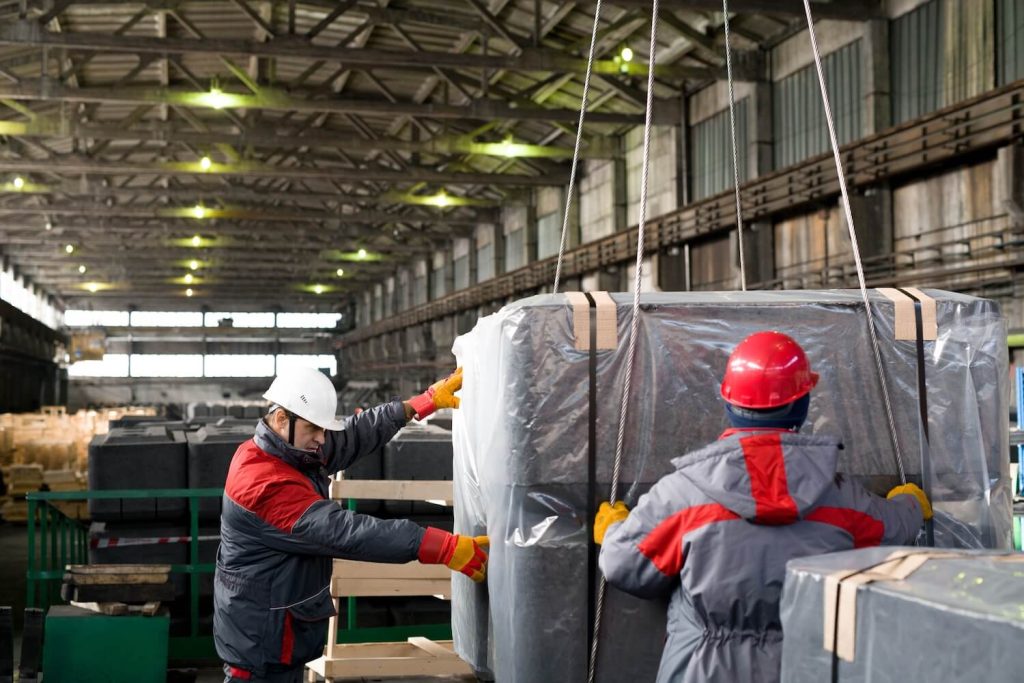
Safety isn’t just a compliance box; it’s the backbone of a successful move. When you are moving 20,000-pound machines while other lines are still humming, the environment becomes high-stakes.
We implement Safety Zones. We create physical and visual barriers, using modular fencing and digital signage, that separate active production areas from the “Moving Corridors.” This ensures that your forklift operators and our rigging teams never cross paths. By treating the move as a gated, controlled operation, we protect your most valuable asset: your people.
The “Single Point of Contact” Philosophy
The nightmare of most industrial moves is “Vendor Finger-Pointing.” The rigger blames the mover; the mover blames the electrician; the electrician blames the site manager.
We eliminate this by providing a single point of contact backed by an integrated dashboard. You don’t call four people to learn where Line B is. You look at one screen or make one call. This “white-glove” approach means the complexity is handled by us, while you focus on what you do best: managing production.
What’s Included: The Full White-Glove Move Spectrum
We don’t just move equipment; we relocate your entire operational ecosystem. Our services are designed for the Operations Director who needs to delegate the entire “headache” to a trusted partner.
- Precision Rigging & Hoisting: Handling high-tolerance CNC machines, injection molders, and specialized assembly lines with specialized air-ride suspension.
- Climate-Controlled Logistics: Essential for sensitive electronics and laboratory equipment frequently found in North Texas aerospace and tech corridors.
- Inventory Transition Management: We don’t just move machines; we move the raw materials and work-in-progress (WIP) inventory so that production can start the second the power is on.
- Utility Coordination: Managing the technical “handshake” at both sites so disconnects and reconnects happen in hours, not days.
- Debris Removal & Lease-End Services: We leave your old facility “broom clean” and ready for inspection, satisfying even the strictest DFW commercial landlords.
- Custom Crating & Protection: Engineered packaging for sensitive optics, robotics, and high-value components that cannot afford a single vibration-induced error.
A New Narrative for Dallas Manufacturers
Think back to the last time your company faced a major change like a relocation. Was it characterized by chaos or by calculation?
The “Weekend Advantage” offers a new narrative. It’s the story of a Dallas manufacturer who saw an opportunity to double their footprint and took it, without missing a single shipment to their largest client. It’s the story of a Dallas Plant Manager who went home on Friday and returned on Monday to a facility that was larger, cleaner, and already running.
When you remove the fear of the “shutdown,” you learn growth becomes an exciting milestone rather than a looming crisis. That feeling of relief and clarity? That is what happens when relocation strategy meets execution.
Frequently Asked Questions
1. Does a phased move actually cost more in the long run?
While the labor hours for a phased move can be slightly higher due to multiple mobilizations, the “Opportunity Cost” is significantly lower. When you factor in the revenue saved by keeping production lines active, a phased move is almost always the more profitable choice for high-volume manufacturers.
2. How do you handle “married” production lines that can’t be easily split?
We identify “Functional Clusters” during the planning phase. If Line A cannot run without the output of Line B, they are moved together as a single unit during a single weekend window. We map the dependencies of your floor to ensure no “orphan” machines are left behind.
3. What about specialized calibration?
For high-precision industries (Aerospace, Medical Device), we build “Calibration Windows” into the schedule. We ensure that OEM technicians or internal QC teams have immediate access to the machine the moment it is leveled and powered at the new site.
4. How do you manage the “Work in Progress” (WIP)?
WIP is the lifeblood of your cash flow. We use a “Just-In-Time” moving strategy for inventory. We move the raw materials first, then the machine, then the finished goods, ensuring the “flow” of your product is never bottlenecked in a warehouse.
5. Can you handle IT and Server Room relocation simultaneously?
Absolutely. A true white-glove service includes the “brain” of the factory. We coordinate the move of your server racks and IT infrastructure to ensure that by the time the first machine is powered on, the network is ready to receive data.
6. What if my new site isn’t 100% ready?
This is the beauty of the phased move. If the new site’s electrical work is delayed on the West Wing, we simply adjust the phases to move the East Wing equipment first. Our strategy is adaptive, not rigid.
Expand and implement your footprint without stopping your line. Your facility is a precision instrument; treat its relocation with the same level of engineering excellence you bring to your products. Request a quote from Johnson Commercial Solutions today!
