
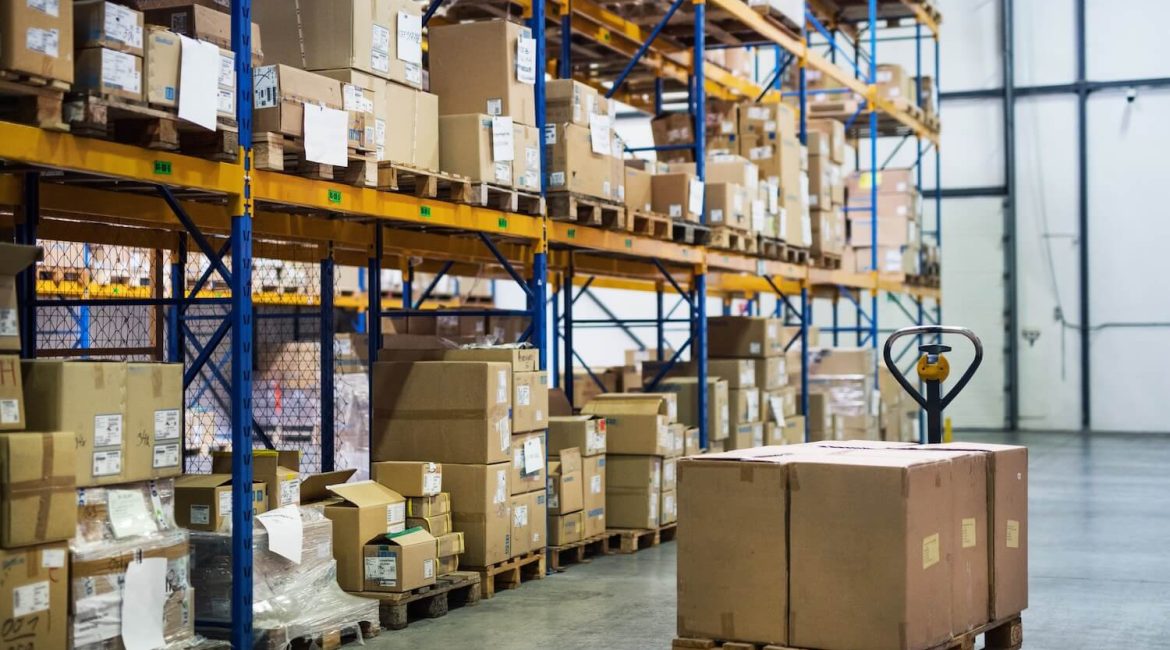
At 4:30 a.m., a loading dock is already humming. Forklifts glide, radios crackle, and a few early-shift operators trudge through the aisles. They glance at screens, scan boxes, chase down misplaced cartons.
But something’s off. Three team members didn’t show. A truck is backed into Bay 7, idle. A critical SKU is missing from the staging zone. One wrong scan a few hours ago has cascaded into a domino effect.
For many logistics leaders, this is the lived daily tension: juggling people, processes, and backlogs in a warehouse that teeters on the edge of overload. The mental ledger of risks, rework, and firefighting never stops.
But what if your warehouse didn’t depend on orchestration by crisis? What if it were built to detect, respond, and stabilize itself, without needing a human to scramble every day?
This is not fantasy. It’s an imminent reality. Welcome to the end of the manual.
Why Is Warehouse Automation Suddenly Non-Negotiable?
The pressures that forced the turning point
- Labor shortages are systemic. Many warehouses now operate with fewer bodies and fewer backup options.
- Fulfillment expectations keep accelerating. Customers expect faster delivery windows, not slower.
- Margin compression is real. Rising energy, transport, and real estate costs leave no room for inefficiency.
- Supply chain volatility demands resilience. Surges, disruptions, and sudden shifts are the new norm.
Put simply, the old model of scale = more people no longer works. Warehouse automation is rapidly becoming the defining axis of resilience and competitiveness.
What Does Warehouse Automation Look Like Today?
To avoid jargon, let’s frame automation as an ecosystem, a network of technologies that layer on top of one another, delivering compounding returns.
1. Robotic Process Automation (RPA) for back-office work
Let the software bots handle repetitive, rules-based tasks: order reconciliations, shipment confirmations, invoice matching. This removes error-prone tasks from human hands and frees staff to handle more complex exceptions.
2. Automated Storage and Retrieval Systems (AS/RS)
Instead of manual forklifts moving down long aisles, goods come to workers (or to packing stations). This reduces travel time, improves storage density, and accelerates throughput.
3. AI-driven analytics and forecasting
AI isn’t just reporting, it’s predictive. It forecasts demand surges, spots patterns in returns, optimizes labor deployment, and warns of inventory imbalances before they blindside you.
4. Autonomous Mobile Robots (AMRs)
Unlike rigid AGVs tied to tracks, AMRs can adapt to changing layouts, reroute in real time, and scale quickly without major infrastructure investment.
5. Integrated platforms & workflow orchestration
The real power emerges when robotics, inventory systems, order management, and analytics talk in one language. When data flows bi-directionally, the operation behaves like a single, self-healing organism.
Together, these layers move the warehouse from a passive stage to a dynamic, responsive system.
What’s Driving Executives to Make the Leap?
Labor as a fragility, not a strength
In today’s tight labor market, a missing shift creates a slot of risk. Automation mitigates that by decoupling throughput from purely human capacity.
Customer demand is unforgiving
When faster and faster delivery is table stakes, there’s no room for slowdowns or errors. Automation shortens cycles and builds consistency.
Efficiency unlocks agility
Automation doesn’t just scale, it enables flexibility. You can shift to micro-fulfillment, drop-ship, or fast replenishment strategies precisely because your backbone is already optimized.
Competitive differentiation
If your distribution rivals can’t respond to demand shocks while keeping cost overhead in check, they’ll lose ground. Being early gives you strategic runway.
Addressing the Anxiety: Will Automation Disrupt My Workforce?
Many leaders fear that robots or AI will displace workers. But the better narrative is augmentation, not replacement.
- Treat people as partners to the system, not obstacles.
- Phased deployment allows your team to adapt gradually.
- Roles evolve: from picking tasks to supervisory, exception-handling, quality control.
- Morale rises when workers see you investing in modern systems, not just squeezing more out of them.
It’s a human + machine collaboration, not a showdown.
The Real ROI: Beyond Cost Savings
Yes, automation cuts labor costs. But the strategic output is worth more:
- Reliability: fewer surprises, more stability
- Speed: compressed lead times without exponentially scaling headcount
- Accuracy: reduced rework, fewer returns, better customer experience
- Scalability: you can meet spikes without emergency hires
- Resilience: your system weathers staffing gaps, disruptions, and demand swings
In volatile markets, this is invaluable.
Leadership That Thinks in Systems, Not Band-Aids
Old-school logistics leadership rewarded heroic problem-solving: the fastest fire-extinguisher. But that model breaks under modern complexity.
The future’s leaders build systems that prevent emergencies:
- See technology as your strategic partner, not a cost center
- Think in workflows, not fast fixes
- Prioritize visibility, not just output
- Value architectures that can evolve, not monoliths that lock you in
If the plant manager used to be the “one who runs around,” now they must be the one who designs the system that runs itself.
Mini-Case: Incremental Automation, Exponential Results
Situation: A regional retailer’s DC in the Midwest faced chronic labor gaps, error rates near 30%, and repeated missed SLAs during peaks.
Approach (phased, not disruptive):
- Introduced AMRs in high-traffic zones
- Layered in AI forecasting to smooth labor allocation
- Deployed RPA for clerical bottlenecks
Outcomes in six months:
- Picking errors down 42%
- Cycle times improved 35%
- Overtime cut
- Morale rose as staff moved into oversight and analytical roles
The narrative is key: they didn’t rip out their warehouse. They elevated it.
Your Roadmap to Automation: Where to Begin
Here’s a simple but strategic path (no grand overhaul required):
- Pinpoint your biggest pain: which zone or process is killing throughput or accuracy?
- Choose your first layer wisely: often AMRs or RPA give the fastest wins
- Integrate from the start: avoid stand-alone islands
- Invest in training and change management: people’s adoption is the make-or-break
- Track the right KPIs from day one: throughput, accuracy, utilization, downtime
- Iterate, don’t freeze frame: every new layer should inform the next
You don’t need to automate everything. You need to automate the right things first, and let that catalyze momentum.
How Johnson Commercial Storage Helps You Build the Future
Johnson Commercial Storage isn’t just a provider of warehouse racks or layout optimizations; we are your strategic automation partner.
We help your teams:
- Design modular automation paths that align with your facility
- Deploy robotics, RPA, analytical layers, in harmony, not isolation
- Incrementally transition your operation, no wholesale disruptions
- Build resilience and visibility into your supply chain
We position you not just to adjust, but to lead.
What the Next Decade Holds
In ten years, the warehouses that dominate won’t be the biggest. They’ll be the smartest.
Leaders who begin automation now will define performance, customer promise, and operational resiliency. The end of the manual isn’t the end of work. It’s the beginning of capability, precision, foresight, and control.
No more midnight scrambles. No more fragile spreadsheets. No more panicked reallocations. This is how warehouses evolve from reactive to generative, from fragile to future-ready.
Common Questions & Answers
Q: What is warehouse automation and why does it matter?
A: Warehouse automation uses robotics, AI analytics, RPA, AMRs, and automated storage systems to streamline fulfillment. It matters because it helps businesses scale reliably, manage labor constraints, reduce errors, and meet accelerating delivery demands.
Q: Which automation technologies should I adopt first?
A: You don’t need to do everything. Common entry points are AMRs for internal transport, RPA for clerical tasks, or AI forecasting for demand smoothing, whichever addresses your biggest bottleneck.
Q: Does automation replace human workers?
A: No, it augments them. Automation handles the repetitive, rule-based tasks. Humans focus on oversight, exceptions, system health, and continuous improvement.
Q: How do I measure ROI on warehouse automation?
A: Track improvements in throughput, accuracy, labor utilization, downtime, overtime reduction, and scalability (ability to absorb spikes without breaking).
Q: What role can Johnson Commercial Storage play?
A: Johnson can help you design a phased automation roadmap, integrate robotics and analytics with your existing facility, and guide your workforce transition for maximum adoption and value.
Concusion
You already know how to run a warehouse under pressure. Now, imagine running one that anticipates pressure. One that doesn’t break under constraints, but flexes.
Johnson Commercial Storage is ready to guide you into that future, designing strategies that let you automate the right things first, evolve naturally, and outpace your competition.
Learn how our technology-driven warehouse solutions can help you move from manual to remarkable.
