
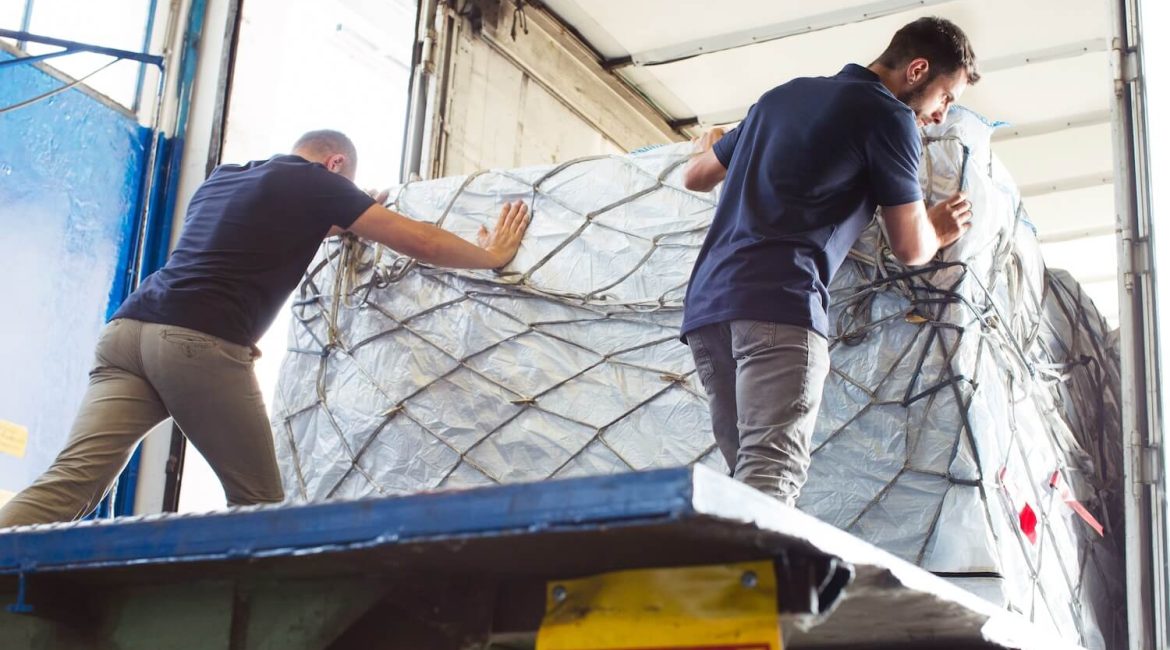
The $10 million production line is silent, the floor is prepped, and the new era of your facility is waiting behind a flatbed truck. But as you look at the 50-ton CNC vertical mill tucked into the back corner of your Kansas City plant, surrounded by low-hanging HVAC ducts, century-old brick, and a floor that hasn’t been surveyed since the Truman administration, the realization hits. The 500-mile haul to the next plant is the easy part. The hardest 100 feet of this journey are the ones between the machine’s current anchor bolts and the bay door.
At Johnson Commercial Solutions Kansas City, we specialize in those critical 100 feet. We provide end-to-end industrial rigging services in Kansas City, integrating engineering precision with a single point of contact to ensure your transition is seamless. From real-time project dashboards to white-glove execution, we help manufacturing leaders turn logistical nightmares into calculated victories.
Why is moving heavy machinery in Kansas City so uniquely challenging?
Kansas City’s industrial landscape is a mix of cutting-edge modern facilities and historic masonry plants. The challenge lies in the “physics of the exit”, navigating massive, modern equipment through legacy footprints where ceiling heights, floor load capacities, and egress points were never designed for today’s 50-ton CNC machines or robotic cells.
- Legacy Infrastructure: Many KC hubs in the Bottoms or near the Missouri River have aging concrete that requires precision weight distribution.
- Tight Tolerances: High-capacity machines often have less than two inches of overhead clearance.
- Point-Load Sensitivity: Standard forklifts can easily “punch through” older floors if the math isn’t perfect.
- Integrated Logistics: Moving the machine out is only half the battle; it must be timed perfectly with specialized transport to avoid downtime.
The Silent Stress of the Plant Manager
You know the feeling. It’s the low-level anxiety that hums in the back of your mind when a major equipment relocation is on the schedule. You aren’t just moving “stuff”; you are moving the heartbeat of your revenue. If a casting cracks during a lift or a spindle is jarred out of alignment because a rigger used the wrong jack point, the “savings” of a budget mover disappear in a single afternoon of lost production.
In Kansas City, we don’t just deal with weight; we deal with history. You might be operating out of a facility that has been expanded four times since 1950. The floor in Bay 1 might be ten-inches reinforced slab, while Bay 4 is five-inches unreinforced. When you’re moving heavy equipment in MO, you need a partner who views your floor not as a sidewalk, but as a structural variable in a complex equation.
How do you calculate floor load capacity before a move?
To prevent structural failure or equipment damage, riggers calculate the “Point Load” by dividing the total weight of the machine (plus the rigging gear) by the square footage of the contact patches (skates or tires).
- Identify Slab Thickness: Utilizing ground-penetrating radar or historical blueprints to verify PSI ratings.
- Weight Distribution: Using steel plating to spread the “footprint” of the load across a larger surface area.
- Dynamic vs. Static Loading: Accounting for the fact that a moving 40,000-lb forklift exerts more downward force during a sudden stop than while parked.
- Path Mapping: Ensuring every inch of the exit route, not just the starting point, can support the weight.
The Math of the “Near Miss”
Imagine a CNC machine transport where the rigger assumes the concrete is uniform. As the forklift hits a hidden void or a thinner pour near a drain, the rear wheels sink three inches. The machine tilts. In that microsecond, the center of gravity shifts, and you are no longer looking at a relocation; you are looking at an insurance claim. Professional industrial rigging services in Kansas City eliminate this risk through proactive engineering, not “gut feelings.”
Is your facility’s ceiling height a dealbreaker for heavy lifting?
Not with the right technology. When traditional cranes can’t fit, we utilize specialized low-profile hydraulic gantry systems and air-shuttle skates that allow us to lift and move 50-ton assets with only inches of overhead clearance.
In many Kansas City manufacturing plants, the overhead crane hasn’t been rated for twenty years, or the HVAC ductwork has encroached on the “lifting zone.” This is where manufacturing plant movers prove their worth. We don’t ask you to tear out your ductwork. We use:
- Hydraulic Skates: These allow the machine to sit barely an inch off the ground while being moved.
- Tri-Block Systems: Ensuring three points of contact to prevent “wobble” on uneven floors.
- Low-Headroom Gantries: Lifting from the side rather than the top, allowing for massive weight capacity in tight quarters.
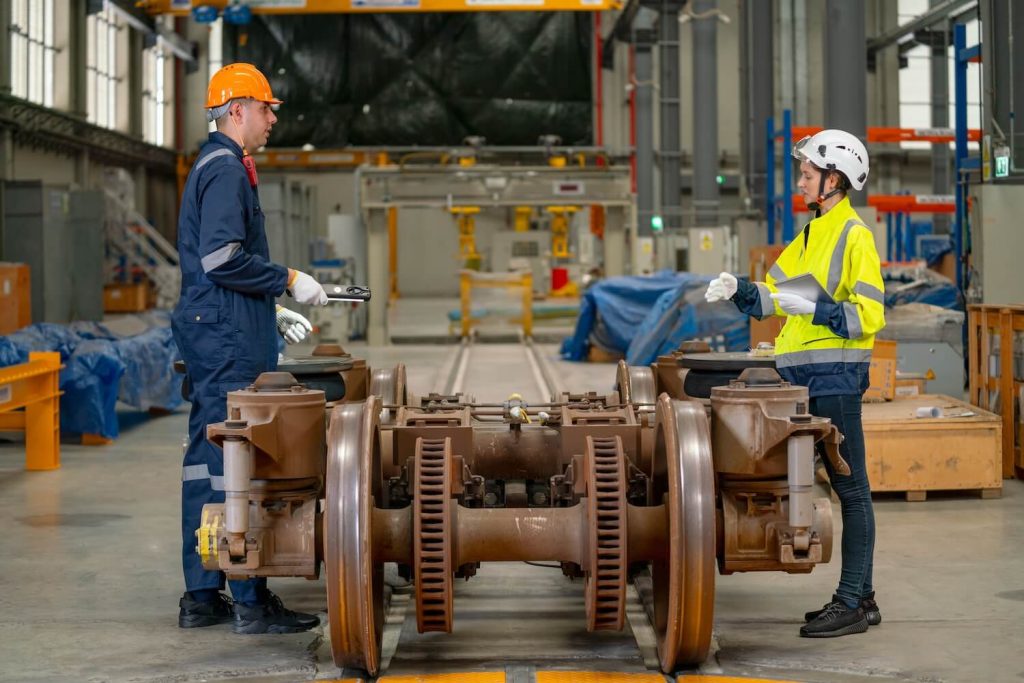
What’s Included: The Johnson Commercial Solutions Standard
When we say “white-glove,” relocation we mean we take the burden of “how” off your plate entirely. Our integrated services include:
- Site-Specific Engineering: Pre-move surveys of floor PSI and egress clearances.
- Precision Leveling & Anchoring: We don’t just “drop” the machine; we ensure it is set for recalibration.
- Intermodal Coordination: Leveraging KC’s massive rail and highway infrastructure for long-distance hauls.
- Single Point of Contact: You talk to one project manager, not five different sub-contractors.
- Digital Project Dashboards: Real-time updates on milestones, so you can report back to stakeholders with confidence.
Navigating the Kansas City Hub: Beyond the Exit
Once the machine is out of the building, the geography of Kansas City becomes your greatest asset. As one of the largest rail hubs in the United States, KC offers unique advantages for CNC machine transport and heavy goods.
If your machinery is headed overseas or across the continent, our proximity to intermodal hubs means we can transition your equipment from our specialized trailers to rail or flat-rack containers with minimal handling. This reduces the “vibration fatigue” on sensitive electronics and high-precision components. We aren’t just moving you out of the building; we are positioning you into the global supply chain.
The Relief of Professionalism
The goal of any relocation isn’t just to get the job done, it’s to get it done so quietly and efficiently that your production schedule barely notices. When you hire experts, the “impossible” turns into a series of solved math problems. The stress of the “what ifs” is replaced by the sight of a 100,000-pound asset gliding across a floor on a cushion of air or precision steel.
You didn’t get into manufacturing to become an expert in tensile strength or hydraulic pressures. You got into it to build things. Let us handle the weight of the transition so you can focus on the weight of your next production run.
Frequently Asked Questions (FAQ)
1. How long does a typical industrial rigging assessment take?
For most KC facilities, a preliminary assessment takes 1–2 hours on-site. We look at entry/exit points, floor conditions, and power disconnects to provide a comprehensive roadmap for the move.
2. Can you move machinery without shutting down my entire plant?
Yes. We specialize in “live-environment” rigging. By using low-noise equipment and coordinating specific “move lanes,” we can often relocate major assets while your other lines remain operational.
3. What is the difference between a standard mover and an industrial rigger?
A mover handles volume; a rigger handles mass and physics. Industrial rigging services in Kansas City require specialized certifications and equipment, like hydraulic gantries and heavy-duty skates, that standard moving companies simply do not possess.
4. Do you handle the electrical and pneumatic disconnects?
While we focus on the physical move, we coordinate closely with your plant engineers or preferred contractors to ensure all utilities are safely capped and labeled before the machine is lifted.
5. Is Kansas City’s weather a factor in machinery relocation?
Absolutely. Humidity and temperature swings can affect precision calibrations and metal expansion/contraction. We utilize climate-controlled staging and specialized tarping to protect sensitive CNC components from the KC elements during transit.
6. What kind of insurance coverage is required for a 50-ton machinery move?
Beyond standard General Liability, a professional rigger should carry Riggers Liability Insurance. This specifically covers the “property of others” while it is in the rigger’s care, custody, and control, including when it is “on the hook” or being jacked.
- Cargo/Inland Marine: Covers the machinery while in transit on Kansas City highways or rail.
- Excess Liability/Umbrella: Often required for high-value CNC lines to ensure the full replacement value is protected.
- Verification: Always request a COI (Certificate of Insurance) that lists your company as “Additionally Insured” before the first piece of equipment is touched.
Heavy lifting requires heavy expertise. Don’t leave your facility’s structural integrity or your equipment’s precision to chance.
Call Johnson Commercial Solutions in Kansas City for a rigging assessment of your machinery today!
